
This is a re-post of a post I wrote a few years ago. It is still true today and I wanted to share it again.
I've been asked before if I celebrate Hanukkah instead of Christmas. The answer is no. I celebrate Hanukkah because it is such a meaningful holiday. It is all about God's miraculous protection and provision, and it's a reminder to rededicate our lives to God and to stand up for what we believe in. You can read more about why I love Hanukkah here. As for Christmas, well, that's another story...
I have many warm and happy memories of Christmas, both from when I was growing up and from when I grew up and had kids of my own. My parents never told me there was a Santa. We were always a "Jesus is the Reason for the Season" family, and my husband and I took the same approach with our girls. Christmas was a happy, fun time for family togetherness, singing, presents, decorating, making cookies, and celebrating the birth of Jesus.
Then a few years ago I started to wonder about some things about Christmas. Things like why is Christmas on December 25? Is that really the day Jesus was born, and how do we know? And why do we have a tree to put presents under, and boughs of holly and yule logs, and why do we kiss under the mistletoe? Why do we make gingerbread men and go caroling? Why do we hang stockings, especially if we don't believe in Santa? And where did the whole idea of Santa come from anyway? Was he really an actual person? I wondered where all of these traditions came from, and why do we all do them if we don't even really know what they mean?
So I did some research. And I was horrified. I found that most of the traditions that have to do with Christmas came from some ancient pagan ritual or custom! Jesus was not born on Christmas. He was probably born in September or October, but we don't even know that for sure. December 25 was the date that the re-birth of the sun god was celebrated in several different cultures long before Jesus was even born. In an attempt to convert pagans to Christianity and perhaps unite his kingdom, the Roman emperor Constantine decided to incorporate the festival of Saturnalia (Dec. 17-25) and the festival of the birth of Mithras (Dec. 25-Jan. 1) into Christianity. This was the beginning of Christmas. Evidence of the depraved customs of these pagan festivals still remains today in the modern observance of Christmas. This evidence is in the tree, the holly, the mistletoe, the yule logs, the gingerbread men, the caroling, Santa, and almost every other tradition you can think of that has to do with Christmas. None of these things have anything to do with celebrating the birth of our Savior.
When I found out the truth about Christmas, I shared the information with my husband. We then shared it with our daughters, and we made a family decision. The decision turned out to be very controversial among our friends and family, but it is very important to us. We decided not to celebrate Christmas.
Amazingly, even before we made this decision, we had been learning about God's holidays found in the Bible. We were learning about Passover - the holiday that Jesus was referring to when he said "do this in remembrance of me". We learned about Pentecost, the Feast of Trumpets, the Day of Atonement, and the Feast of Tabernacles. We had begun celebrating some of these, and we were learning how full of meaning they are. They each have significant historical meaning, they each have applications to our lives today, and they each specifically point to Messiah! They are packed full of symbolism that is so detailed that it could only have been designed and placed there by God himself. We also learned about Purim and Hanukkah, which commemorate God's amazing and miraculous deliverance of His people. The traditions associated with all of these holidays are full of significance and purpose. Through celebrating them we have learned so much about God's incredibly intricate plan and His wonderful love and mercy. We have learned more about our Messiah Yeshua than we have ever known before! Throughout the year, each time we celebrate one of these holidays, we are reminded of all we have learned, and each time we learn even more.
So, our decision to not celebrate Christmas was not a difficult one. Throughout the Bible, God repeatedly tells his people to get rid of their idols and anything that has to do with other gods. That's what we're trying to do. We are choosing to honor God by celebrating His holidays that He instructed His people to keep, rather than trying to honor Him with customs and traditions that remind Him of things he hates. Here's a little story to illustrate what I mean:
Once upon a time there was a man who was the father of many children. This man's children wanted to do something very special in his honor. They asked him what he would like them to do, and so he gave them a set of detailed instructions. He told them the things he loved and the things he hated. He told them what would mean the most to him, and also the things that he specifically didn't want them to do. He told them that if they followed these instructions everyone would know that he was their father and they were his children. He even told them that these instructions were also for their good; that they would be especially blessed if they carried them out. But, in planning this special event, the children got sidetracked. They listened to other children of other fathers. They saw the things that the other fathers preferred, and they thought those things might work better to honor their father, too. Eventually the instructions were set aside and forgotten. When it came time for the event, it was huge and spectacular. But it was nothing like the father expected or wanted. It didn't include any of the things he had told them he loved, and it did include some of the things he had said he hated, and even some things he had told them specifically not to do! Although his children loved him very much, it seemed as if they didn't care at all about his instructions. It seemed more important to them to do what they thought was best. And sadly, the children missed out on the good things that their father had built into the instructions especially to bless them.
I think it is so important to do things God's way. I think He is very disappointed when we choose to do things our way. Sometimes it's necessary to change our ways to match up with His. When we do this we are blessed.
I will close this post with a challenge to you, dear readers. If you are a believer in Jesus, and you try to live your life for Him, here is your challenge:
Research history.
Understand the reasons why you do the things you do.
Dig in and really study God's Word.
Pray.
Know what He wants you to do.
And then...do it.
Showing posts with label Faith. Show all posts
Showing posts with label Faith. Show all posts
Friday, December 25, 2015

Thursday, December 5, 2013
Handmade Hanukkah Gifts
Last night we lit all eight Hanukkah candles! I love to see all of the candles lit, but I'm always a little sad, too, because I really don't want Hanukkah to be over. I really love this holiday. (Want to know why I love it so much? Click HERE to read my post "Why I Love Hanukkah")
This year I made some Hanukkah gifts again, although not quite as many as last year. I think it's just so nice to share a handmade gift with someone you love!
For my Mom and Dad I made this Hanukkah bunting to help make their holiday festive.


 and here's the other side:


This year I made some Hanukkah gifts again, although not quite as many as last year. I think it's just so nice to share a handmade gift with someone you love!
For my Mom and Dad I made this Hanukkah bunting to help make their holiday festive.

Dad wanted a friend for the sock bird that I made for his birthday, so I made this sock monkey for him.

For my mom and Robert's mom I made lavender scented soy candles in teacups.

And for Robert's mom I made this sweet little zippered pouch in the shape of a doxie.

For Rebecca: one of my "Violet May" ruffled shoulder bags featuring her favorite color.

And for Haley: a Bible cover made with different Star of David fabrics.

For Robert I made a zippered bag to carry his tallit to and from Shabbat services.

And Robert, Haley, and Rebecca all got reversible fabric bookmarks. Here's one side:


I didn't forget the kitty cats! They each got a catnip filled fish shaped toy. They LOVE their new fish toys!

Haley and Rebecca both made some gifts this year, too, including some peppermint goat milk oatmeal soap that Haley made. She gave "Haley's Goatmeal Soap" to her grandparents and to friends from the Messianic fellowship we attend. Her goatmeal soap smells so good!
Handmade gifts are so fun to make!
Happy Hanukkah!
Sunday, December 1, 2013
Our Thanksgivukkah

This year we celebrated a holiday that only happens once in a lifetime: "Thanksgivukkah"! Hanukkah and Thanksgiving happened to coincide this year. I think these two holidays work perfectly together. They both are celebrations of our freedom to worship God, and both are expressions of thankfulness for God's miraculous provision.
So, we did some special things for our Thanksgiving/Hanukkah celebration this year.
We decorated our Thanksgiving table with a Hanukkah menorah, dreidels and gelt.

Haley made sweet potato latkes...a perfect blending of two traditional holiday foods!


The pies turned out pretty :)

Everything was delicious, and after our turkey dinner we enjoyed an evening at home lighting the menorah, listening to Hanukkah music, watching "Fiddler on the Roof", and being doubly thankful for our many blessings!

All photos except the last one were taken by Haley.
To learn more about Hanukkah, check out these links:
Tuesday, October 29, 2013
Yesh Tikvah Ministries: There is Hope!
.jpg)
Here's the mission statement we came up with: "Our mission is to provide help and hope to those who need it: meeting physical needs such as food and clothing, and meeting spiritual needs by sharing the hope we have found in Messiah Yeshua and proclaiming His Truth."
We have three ongoing projects:
Tikvah's Closet, where we collect gently used and new clothing to distribute to those who need it;
Tikvah's Pantry, where we collect food and distribute it to those who are hungry; and
Handmade Tikvah, where we make and donate handmade items.
We've also started a weekly Torah study that meets at our house at 2 pm every Saturday, where Robert leads us in study and discussion of the weekly Torah portion.
So far it's going great, and we're excited! We've been able to provide clothing for five different families, and we've donated school supplies to families and schools. We are getting ready to put together food baskets for Thanksgiving to give to a few families so they will have a nice Thanksgiving dinner. We are working on a project through Craft Hope, making pillowcase dresses for girls around the world. And we have a few regular attenders at our weekly Torah study.
We need more space to store the food and clothing, so we are making plans to remodel our garage for a Yesh Tikvah Ministries headquarters building.
Thanks to Haley, we have a website, a Facebook page, and a newsletter that goes out every week. If you're interested, go to yeshtikvah.org and sign up for the newsletter...then go like us on Facebook!
Here are those links again:
Yesh Tikvah Ministries Website
Yesh Tikvah Ministries Facebook Page
This post is linked up with:


Thursday, September 26, 2013
Sukkot Party!

In order to "dwell" in a sukkah, we eat in it, pray, read, and sometimes sleep in it, and we invite guests to spend time in it with us. This year was extra special, because we had a party in our sukkah! We invited everyone from the Messianic fellowship where we attend, and some other friends, too. We ended up having 20 guests.
Haley and I had lots of fun decorating the sukkah. We went a little crazy buying decorations... it was a very good thing we found most of them at the dollar store!


A lady from our fellowship purchased a lulav and citron, the "four species" for us all to wave. (For an explanation about this, you can read this article about Sukkot from Hebrew4Christians.com.

At the beginning of the party, some guests made more decorations for the sukkah while we waited for everyone to arrive.

Then everyone got to build their own tiny edible sukkah! It started to rain (oh no!!!), so we finished the tiny sukkah building project inside.
 |
| Rebecca's tiny sukkah |
It stopped raining (yay!!!), and we all went out and sat in and around the sukkah to read some scriptures about Sukkot.

Then we ate in the sukkah.

And then Haley brought out her guitar and led us in some singing.

And we sat around the campfire for the rest of the evening.

A great way to spend a Sukkot evening! I think we'll do it again next year!
Thursday, March 28, 2013
Passover Prizes
During the Passover Seder, it is a tradition to break a matzah in two and hide part of it for the children to find. This matzah called the "Afikomen". It is wrapped in a linen cloth and hidden by the leader of the seder, usually the father. For believers in Yeshua the Messiah, the Afikomen is a symbol of Yeshua, His death and His resurrection. At the appropriate time in the seder, the children look for it, and the one who finds it is rewarded with a "ransom" paid by the leader.
At our family seder, since we just have two daughters, I like to tell them to search for the Afikomen together, so they both get a prize. I usually put together a gift bag for each of them for my husband to give them in exchange for the Afikomen. This year in their gift bags they each got a little lamb that I made out of vintage sheets from a vintage pattern.

Aren't they cute? This is the pattern I used:

Adorable, right? I didn't put the silly hair on the lambs, though. I thought they were cuter without it.
Also in their gift bags was a beautiful bookmark for each of them from an Etsy shop called Light of Zion Handcrafted Jewelry. This one is called "Torah on Your Heart":
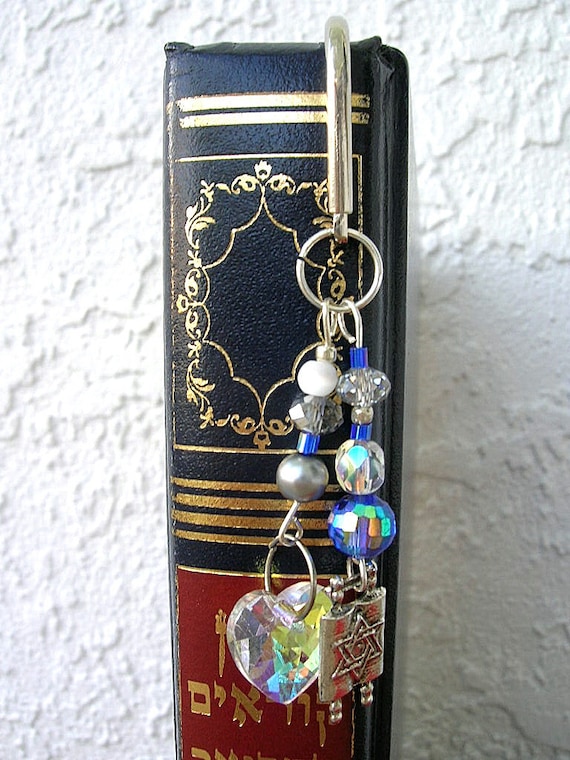 |
| Torah on Your Heart Bookmark |
And this one is "One in Messiah":
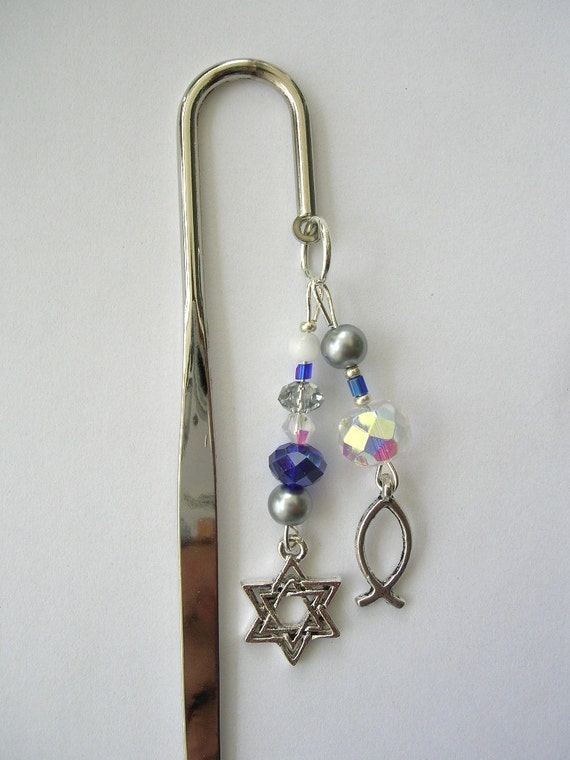 |
| One in Messiah Bookmark |
They are so pretty, like jewelry for your book or Bible, and they are so special and meaningful! My girls love them! They came with a little card with a scripture attached, and a sweet handwritten note from Elisheva, the artist who created them. Elisheva also has an Etsy shop called Messianic Cards, featuring her works of art on gorgeous cards. I haven't ordered any yet, because I simply can't choose! Here are a couple of nice ones for Passover:
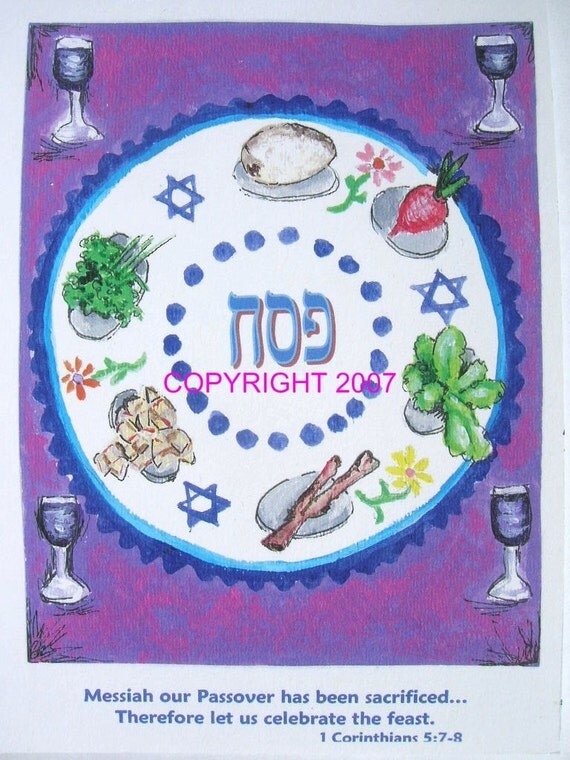 |
| Messiah Our Passover Cards |
 |
| Celebrate the Feast Cards |
Tuesday, March 26, 2013
Passover: A Night to Remember

Passover began last night at sundown. This year as Passover approached, I was especially impressed by the theme of remembrance. God has given us all of His holidays because He wants us to remember. He wants us to remember that we are His people and He is our God. He wants us to remember the the great miracles that He has performed on behalf of his people. He wants us to remember Him! So he gives us special times set aside specifically for remembering, and he fills these times with symbols, illustrations, and object lessons to help us remember. This is what Passover is all about.
While preparing for Passover, we literally clean the leaven out of our homes. Leaven is a symbol for sin, so we throw it all out. We sweep, vacuum, mop, and clean to make sure there are no little crumbs left that might contain leaven. While we do this we remember how easily sin can creep into our lives, and we need to throw it all out! As we work to get the leaven out of our houses, we remember that sin, like leaven, can be hidden in unexpected places, and we must be vigilant in keeping it out of our lives.
Once the leaven is all cleaned out, it is time for the Passover seder. Throughout the seder, we remember and we teach our children to remember. When we read the words of the Haggadah, we remember the events that took place when God delivered His people from slavery. We remember the pain and bitterness of that slavery when we eat the horseradish and our eyes water. We splatter ten drops of wine or juice on our plates as we remember each plague that Egypt suffered because Pharoh wouldn't let God's people go. When we see the shank bone on the seder plate, we remember that each family was required to sacrifice a lamb. When we eat the parsley we remember that God passed over the homes of His people during the plague of the firstborn if they had spread the blood of the sacrificed lamb on their doorposts with hyssop as He had instructed. When we drink the first cup we remember that God brought His people out of Egypt to sanctify them; to set them apart. The second cup reminds us that He delivered them from their bondage, and the third cup helps us remember that they were redeemed; a price was paid with God's powerful, outstretched arm. The fourth cup is the Cup of Hope, and when we drink it we remember that God gave His people a hope for the future. When we eat the matzah we remember that the people left Egypt in haste, and their bread did not have time to form leaven and rise.
But that's not all! As believers in Messiah Yeshua, there is so much more! We look at all of these symbols from another perspective, because Yeshua told us to do these things in remembrance of Him! Now each part of the seder becomes a beautiful picture of Messiah. When we drink the wine we remember the blood he shed for us, so that WE can be set apart, delivered, redeemed, and have a hope for the future. When we eat the matzah we remember that Yeshua had no "leaven", and did not sin, yet, like the matzah, he was pierced, striped and broken for us. Throughout the seder we remember that Yeshua is our Passover lamb. He was the ultimate sacrifice for us, and we can now be brought out of slavery to sin and into freedom!
Passover is the beginning of the Festival of Unleavened Bread, when we eat matzah, and no leaven, for a week. We are reminded of Yeshua every time we eat matzah during this week. The Feast of Firstfruits also takes place during this week, which is the day the offering of firstfruits was waved before God. This is the same day that Yeshua rose from the grave!
This has become one of my favorite times of the year. Passover has such great significance, especially for the believer in Yeshua! There is much, much more to it than what I've written here. Here are some links to additional information if you are interested in learning more:
Why would a Christian Observe Passover?
Passover Overview
A Messianic Seder and Haggadah
The ABCs of Passover
What is Passover?
Another Messianic Haggadah
My blog post from 2 years ago "Why I Love Passover"
And here is my favorite Passover video this year:
This post is linked up here:
Time-Warp Wife Titus 2sday
Deep Roots at Home
Teaching What is Good Women Helping Women
Winsome Wednesday
Wholehearted Home Wednesday
Thought Provoking Thursday
Monday, December 10, 2012
What About Christmas?
I've been asked before if I celebrate Hanukkah instead of Christmas. The answer is no. I celebrate Hanukkah because it is such a meaningful holiday. It is all about God's miraculous protection and provision, and it's a reminder to rededicate our lives to God and to stand up for what we believe in. You can read more about why I love Hanukkah here. As for Christmas, well, that's another story...
I have many warm and happy memories of Christmas, both from when I was growing up and from when I grew up and had kids of my own. My parents never told me there was a Santa. We were always a "Jesus is the Reason for the Season" family, and my husband and I took the same approach with our girls. Christmas was a happy, fun time for family togetherness, singing, presents, decorating, making cookies, and celebrating the birth of Jesus.
Then a few years ago I started to wonder about some things about Christmas. Things like why is Christmas on December 25? Is that really the day Jesus was born, and how do we know? And why do we have a tree to put presents under, and boughs of holly and yule logs, and why do we kiss under the mistletoe? Why do we make gingerbread men and go caroling? Why do we hang stockings, especially if we don't believe in Santa? And where did the whole idea of Santa come from anyway? Was he really an actual person? I wondered where all of these traditions came from, and why do we all do them if we don't even really know what they mean?
So I did some research. And I was horrified. I found that most of the traditions that have to do with Christmas came from some ancient pagan ritual or custom! Jesus was not born on Christmas. He was probably born in September or October, but we don't even know that for sure. December 25 was the date that the re-birth of the sun god was celebrated in several different cultures long before Jesus was even born. In an attempt to convert pagans to Christianity and perhaps unite his kingdom, the Roman emperor Constantine decided to incorporate the festival of Saturnalia (Dec. 17-25) and the festival of the birth of Mithras (Dec. 25-Jan. 1) into Christianity. This was the beginning of Christmas. Evidence of the depraved customs of these pagan festivals still remains today in the modern observance of Christmas. This evidence is in the tree, the holly, the mistletoe, the yule logs, the gingerbread men, the caroling, Santa, and almost every other tradition you can think of that has to do with Christmas. None of these things have anything to do with celebrating the birth of our Savior.
When I found out the truth about Christmas, I shared the information with my husband. We then shared it with our daughters, and we made a family decision. The decision turned out to be very controversial among our friends and family, but it is very important to us. We decided not to celebrate Christmas.
Amazingly, even before we made this decision, we had been learning about God's holidays found in the Bible. We were learning about Passover - the holiday that Jesus was referring to when he said "do this in remembrance of me". We learned about Pentecost, the Feast of Trumpets, the Day of Atonement, and the Feast of Tabernacles. We had begun celebrating some of these, and we were learning how full of meaning they are. They each have significant historical meaning, they each have applications to our lives today, and they each specifically point to Messiah! They are packed full of symbolism that is so detailed that it could only have been designed and placed there by God himself. We also learned about Purim and Hanukkah, which commemorate God's amazing and miraculous deliverance of His people. The traditions associated with all of these holidays are full of significance and purpose. Through celebrating them we have learned so much about God's incredibly intricate plan and His wonderful love and mercy. We have learned more about our Messiah Yeshua than we have ever known before! Throughout the year, each time we celebrate one of these holidays, we are reminded of all we have learned, and each time we learn even more.
So, our decision to not celebrate Christmas was not a difficult one. Throughout the Bible, God repeatedly tells his people to get rid of their idols and anything that has to do with other gods. That's what we're trying to do. We are choosing to honor God by celebrating His holidays that He instructed His people to keep, rather than trying to honor Him with customs and traditions that remind Him of things he hates. Here's a little story to illustrate what I mean:
Once upon a time there was a man who was the father of many children. This man's children wanted to do something very special in his honor. They asked him what he would like them to do, and so he gave them a set of detailed instructions. He told them the things he loved and the things he hated. He told them what would mean the most to him, and also the things that he specifically didn't want them to do. He told them that if they followed these instructions everyone would know that he was their father and they were his children. He even told them that these instructions were also for their good; that they would be especially blessed if they carried them out. But, in planning this special event, the children got sidetracked. They listened to other children of other fathers. They saw the things that the other fathers preferred, and they thought those things might work better to honor their father, too. Eventually the instructions were set aside and forgotten. When it came time for the event, it was huge and spectacular. But it was nothing like the father expected or wanted. It didn't include any of the things he had told them he loved, and it did include some of the things he had said he hated, and even some things he had told them specifically not to do! Although his children loved him very much, it seemed as if they didn't care at all about his instructions. It seemed more important to them to do what they thought was best. And sadly, the children missed out on the good things that their father had built into the instructions especially to bless them.
I think it is so important to do things God's way. I think He is very disappointed when we choose to do things our way. Sometimes it's necessary to change our ways to match up with His. When we do this we are blessed.
I will close this post with a challenge to you, dear readers. If you are a believer in Jesus, and you try to live your life for Him, here is your challenge:
Research history.
Understand the reasons why you do the things you do.
Dig in and really study God's Word.
Pray.
Know what He wants you to do.
And then...do it.
I have many warm and happy memories of Christmas, both from when I was growing up and from when I grew up and had kids of my own. My parents never told me there was a Santa. We were always a "Jesus is the Reason for the Season" family, and my husband and I took the same approach with our girls. Christmas was a happy, fun time for family togetherness, singing, presents, decorating, making cookies, and celebrating the birth of Jesus.
Then a few years ago I started to wonder about some things about Christmas. Things like why is Christmas on December 25? Is that really the day Jesus was born, and how do we know? And why do we have a tree to put presents under, and boughs of holly and yule logs, and why do we kiss under the mistletoe? Why do we make gingerbread men and go caroling? Why do we hang stockings, especially if we don't believe in Santa? And where did the whole idea of Santa come from anyway? Was he really an actual person? I wondered where all of these traditions came from, and why do we all do them if we don't even really know what they mean?
So I did some research. And I was horrified. I found that most of the traditions that have to do with Christmas came from some ancient pagan ritual or custom! Jesus was not born on Christmas. He was probably born in September or October, but we don't even know that for sure. December 25 was the date that the re-birth of the sun god was celebrated in several different cultures long before Jesus was even born. In an attempt to convert pagans to Christianity and perhaps unite his kingdom, the Roman emperor Constantine decided to incorporate the festival of Saturnalia (Dec. 17-25) and the festival of the birth of Mithras (Dec. 25-Jan. 1) into Christianity. This was the beginning of Christmas. Evidence of the depraved customs of these pagan festivals still remains today in the modern observance of Christmas. This evidence is in the tree, the holly, the mistletoe, the yule logs, the gingerbread men, the caroling, Santa, and almost every other tradition you can think of that has to do with Christmas. None of these things have anything to do with celebrating the birth of our Savior.
When I found out the truth about Christmas, I shared the information with my husband. We then shared it with our daughters, and we made a family decision. The decision turned out to be very controversial among our friends and family, but it is very important to us. We decided not to celebrate Christmas.
Amazingly, even before we made this decision, we had been learning about God's holidays found in the Bible. We were learning about Passover - the holiday that Jesus was referring to when he said "do this in remembrance of me". We learned about Pentecost, the Feast of Trumpets, the Day of Atonement, and the Feast of Tabernacles. We had begun celebrating some of these, and we were learning how full of meaning they are. They each have significant historical meaning, they each have applications to our lives today, and they each specifically point to Messiah! They are packed full of symbolism that is so detailed that it could only have been designed and placed there by God himself. We also learned about Purim and Hanukkah, which commemorate God's amazing and miraculous deliverance of His people. The traditions associated with all of these holidays are full of significance and purpose. Through celebrating them we have learned so much about God's incredibly intricate plan and His wonderful love and mercy. We have learned more about our Messiah Yeshua than we have ever known before! Throughout the year, each time we celebrate one of these holidays, we are reminded of all we have learned, and each time we learn even more.
So, our decision to not celebrate Christmas was not a difficult one. Throughout the Bible, God repeatedly tells his people to get rid of their idols and anything that has to do with other gods. That's what we're trying to do. We are choosing to honor God by celebrating His holidays that He instructed His people to keep, rather than trying to honor Him with customs and traditions that remind Him of things he hates. Here's a little story to illustrate what I mean:
Once upon a time there was a man who was the father of many children. This man's children wanted to do something very special in his honor. They asked him what he would like them to do, and so he gave them a set of detailed instructions. He told them the things he loved and the things he hated. He told them what would mean the most to him, and also the things that he specifically didn't want them to do. He told them that if they followed these instructions everyone would know that he was their father and they were his children. He even told them that these instructions were also for their good; that they would be especially blessed if they carried them out. But, in planning this special event, the children got sidetracked. They listened to other children of other fathers. They saw the things that the other fathers preferred, and they thought those things might work better to honor their father, too. Eventually the instructions were set aside and forgotten. When it came time for the event, it was huge and spectacular. But it was nothing like the father expected or wanted. It didn't include any of the things he had told them he loved, and it did include some of the things he had said he hated, and even some things he had told them specifically not to do! Although his children loved him very much, it seemed as if they didn't care at all about his instructions. It seemed more important to them to do what they thought was best. And sadly, the children missed out on the good things that their father had built into the instructions especially to bless them.
I think it is so important to do things God's way. I think He is very disappointed when we choose to do things our way. Sometimes it's necessary to change our ways to match up with His. When we do this we are blessed.
I will close this post with a challenge to you, dear readers. If you are a believer in Jesus, and you try to live your life for Him, here is your challenge:
Research history.
Understand the reasons why you do the things you do.
Dig in and really study God's Word.
Pray.
Know what He wants you to do.
And then...do it.
Sunday, October 7, 2012
Why I Love Sukkot: The Festival of Tabernacles

I love the history of Sukkot.
During the time in history when the Temple stood in Jerusalem, Sukkot was one of the festivals when all of the men of Israel traveled to Jerusalem to keep this special appointment with God. There was music and dancing, ceremonies and sacrifices. Everyone stayed in temporary shelters for the duration of the festival, as a reminder of the years spent in the wilderness in temporary dwellings. At the Temple there were giant candelabra that lit up the city and could be seen from miles away. This festival was an expression of thankfulness for the harvest and the rain; a joyous celebration of God's provision.
I love building and "dwelling" in a sukkah.
One of the ways we celebrate Sukkot today is by building a sukkah. A sukkah is a temporary dwelling, like a little hut. It has at least three walls, is built mostly out of natural materials, and has a roof made of branches that you can see the stars through. A sukkah is a place to eat, read, pray, and spend time with family and friends. Some people even sleep out in their sukkah. Sometimes our family goes camping in a tent during Sukkot. When we can't go camping, we build a sukkah in our back yard. Time spent in the sukkah reminds us what is important in life. Material things are only temporary. God is our shelter and our provider!
 |
| Our little sukkah last year |
I love that Jesus was born during Sukkot!
The Bible doesn't mention specifically when Yeshua was born, but it can be figured out if we do the math. (Note: if you are new to my blog, I use the names "Jesus" and "Yeshua" interchangeably. Yeshua is His name in Hebrew.) Zechariah, the father of Yeshua's cousin John (Yochanan "the Immerser") heard from God that he would have a son while he was ministering in the Temple during the week on the Hebrew calendar of Sivan 12 to 18. John was born around the time of Passover. We know that Mary (Miriam) conceived Jesus six months after John's conception, which would mean Jesus was conceived during Hannukah. The Light of the World conceived during the Festival of Lights! Forty weeks later is....guess what? Sukkot! And does a sukkah look vaguely familiar to you?

It is very likely that Yeshua was born in a sukkah! There was no room in the inn because the census was taking place during the festival. The temporary shelters called sukkot were also often built to house animals out in the fields (the Hebrew word for "stable" is succoth!). Yeshua came to dwell or "tabernacle" with us during the Feast of Tabernacles! This makes the festival even more meaningful for us as believers in Yeshua! It's a perfect time to sing all of those songs that I love, like "Away in a Manger", "O Holy Night", and "Silent Night".
An important part of Sukkot is water. During Temple times, a water ceremony was performed during Sukkot to thank God for the rains he had provided for the harvest, and to pray and thank God in advance for rain for the next harvest. A gold pitcher was brought out with water from the pool of Siloam. The priest poured out the water onto the altar and would recite Isaiah 12:1-3.
"Then you will say on that day,“I will give thanks to You, O Lord;
For although You were angry with me,
Your anger is turned away,
And You comfort me.
2 “Behold, God is my salvation,
I will trust and not be afraid;
For the Lord God is my strength and song,
And He has become my salvation.”
3 Therefore you will joyously draw water
From the springs of salvation.
Do you know what the Hebrew word for "salvation" is? Yeshua!!! And it was at this specific time that Jesus said these famous words in John 7:37-38:
Now on the last day, the great day of the feast, Jesus stood and cried out, saying, “If anyone is thirsty, let him come to Me and drink. He who believes in Me, as the Scripture said, ‘From his innermost being will flow rivers of living water."
Only the Messiah himself could make such a bold statement!
I love that Sukkot is a "dress rehearsal" for the future.
Prophecy tells us that, in the future, all nations will gather in Jerusalem and celebrate the Feast of Tabernacles! (Zechariah 8:22 and 14:16) Revelation 21:3 says:
And I heard a loud voice from the throne, saying, “Behold, the tabernacle of God is among men, and He will dwell among them, and they shall be His people, and God Himself will be among them"
Sukkot makes us think of the future; of the day when we will all gather in Jerusalem and celebrate with Yeshua!
I love that the first Thanksgiving was inspired by Sukkot!
Here in the U.S.A. we celebrate Thanksgiving every year in November. Many experts and scholars agree that the pilgrims looked to the Bible to find a way to thank God for the harvest and for His provision, and modeled their feast after Sukkot. (Try an internet search of "Thanksgiving and Sukkot" for more information on this).
Can you see why I love Sukkot? It is a joyous, exciting time: a time for remembering that God is our shelter, a time to be thankful for His provision, a time to celebrate the birth of Jesus, and a time to look toward the future when we will all celebrate the Feast of Tabernacles with Him!
Saturday, May 26, 2012
Shavuot - What is it?
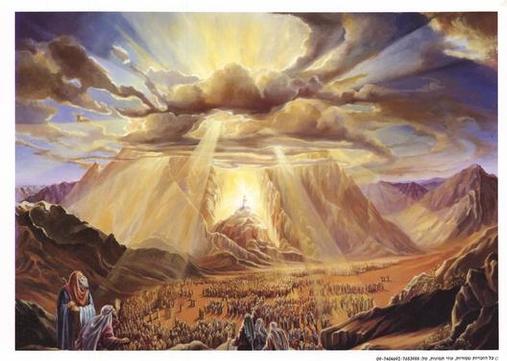
Have you ever heard of Shavuot? No? How about the Feast of Weeks? Or here's one you might know: Pentecost? Well, these are three different names for the same day.
If you are like me, you may already know a little about Pentecost, but never have heard the other terms at all. I spent most of my life attending Pentecostal churches, and I did not understand what Pentecost is! I thought it was an event that took place in the New Testament in Acts 2, where God gave us his Holy Spirit. That is a big part of it, but there is SO much more!!! Here is a little bit of what I have learned about Shavuot.
"Shavuot" is a Hebrew word that means "weeks". After Passover, seven weeks are counted out. The next day, the 50th day, is Shavuot. "Pentecost" is the Greek word for 50. The first Shavuot took place at Mount Sinai, 50 days after the Children of Israel left Egypt. An absolutely amazing thing happened. God came down to the mountain! There was thunder and lightning, and the sound of a loud shofar blast that got louder and louder (can you imagine?). God descended on the mountain in fire, and the whole mountain was enveloped in smoke and it shook violently. The people were so afraid that they were trembling and would not come close. They sent Moses up to talk to God. And God talked to him in a voice! He told Moses what to tell the people, engraving His words on two stone tablets. This was His covenant with the people of Israel! He wanted to be their God and He wanted them to be His people, set apart just for Him.
Since then, God's people have celebrated this event at Shavuot. When the Temple still existed, there was a special wave offering and sacrifices that took place. This festival was one of the three "pilgrimage" festivals, when all of the men traveled to the Temple in Jerusalem to offer their sacrifices and celebrate this special event.
Fast forward now to the New Testament, which is more familiar territory for many of us. Jesus (Yeshua) had promised His followers that the Holy Spirit would come, and would give them power to be witnesses for him. In Acts chapter 2, the believers were all gathered in one place, and guess what? IT WAS SHAVUOT! They were gathered there with many, many other Jews to celebrate the Festival of Shavuot. And again, an amazing thing happened! There was a sudden sound like the roar of a violent wind, which filled the whole place! Then, God's Spirit came down, and what looked like tongues of fire came and rested on each one of them (can you imagine?) They began speaking in different languages, enabled by the Spirit of God. This was such a commotion that a huge crowd gathered. There were Jews from all the other nations there to celebrate Shavuot, and these people understood the languages they were speaking! Peter then spoke to them all and told them what was going on. About three thousand people became believers in Yeshua the Messiah as a result!
I just can't get over how incredible this is! The first Shavuot was fifty days after the crossing of the Red Sea, and freedom from slavery. The Day of Pentecost in Acts 2 was fifty days after the resurrection of the Messiah, who frees us from sin! At the first Shavuot, God engraved His words on stone for us. In Acts 2, He sent His Spirit to engrave His word on our hearts. In both instances, His presence came down in the form of fire, and His words were audibly heard.
There is much, much more to Shavuot than what I have written here; many more correlations, and much more amazing symbolism. I urge you to look into it for yourself. There is so much to learn about a God that has such a great love for us that He has an entire detailed plan that is taking place over the ages, just so that we can know Him!
Wednesday, March 14, 2012
What I Believe
One of the reasons I started this blog was to keep far-away friends and
family informed about what is going on in my life. This way, since I don’t see them every day,
at least they can have a little taste of what’s going on with me and my family
through my descriptions and photos. It
has come to my attention that some of those friends and family may have some
questions about some of the things I believe.
If that’s you, then this post was written for you. If that’s not you, feel free to read on
anyway if you’re interested.
A few years ago, my husband and I made some changes in the way we live
our lives. Those changes came about
through a series of conversations with each other, through a book we happened
to be reading at the time, through a lot of searching and studying the Bible,
through fasting (we happened to be participating in a fast at the church we
attended), and through much prayer. I
believe that these things all worked together to bring us to the point we are
now. I think God was trying to tell us
something, and we have tried to listen and adjust our lives accordingly. Our fundamental beliefs have not
changed. The way we live out our faith
certainly has.
So, here is a simple statement of my basic beliefs. As you read these, keep in mind that I am not
a theologian or a Bible scholar. What I
am is an imperfect human being on a constant search for the truth.
I BELIEVE that
the God of the Bible is the one true God, the creator of the universe. He is unchanging and everlasting, and has
revealed Himself to us in the form of the Father, the Son and the Holy Spirit.
(Deuteronomy 6:4; Isaiah 43:10-11; Hebrews
13:8; Matthew 28:19)
I BELIEVE that
the Bible is the inspired word of God, infallible and without error in its
original form. The scripture is God’s
revelation to us, and is the authority by which we should live our lives. It should be interpreted with the original
context in mind. (2 Timothy 3:15-17; 1
Thessalonians 2:13; 2 Peter 1:21)
I BELIEVE that
Yeshua the Messiah (Jesus the Christ) is the one and only Son of God, born of a
virgin. He is a man and yet fully God at
the same time. He lived a life without
sin, and is the promised Messiah, Savior of the world through His death and
resurrection. (Matthew 1:23; 1 Peter 2:22; 1 Corinthians 15:3)
I BELIEVE that
mankind was created good, in God’s image, but chose to sin, bringing physical
and spiritual death upon himself. Every
person (except Yeshua the Messiah) has sinned.
Because of this, God sent Yeshua as the ultimate sacrifice for all of
our sins. Salvation from our sins is a
gift to anyone who will receive it. If
we believe in Him, repent from our sins and turn toward Him, then we will have
eternal life. We are only saved by grace, through faith, and the only way to
have a relationship with God the Father is through his Son, Yeshua. (Genesis 1:27; Genesis 3; Romans 3:23; Romans
5:12-19; Romans 6:23; John 14:6)
I BELIEVE that
today Yeshua sits at the right hand of God.
Someday He will return in a physical and visible way, and will raise the
dead (of which He is the “firstfruits”).
There will be judgment for all, and all whose names are found in the
Book of Life will remain with him forever, where there will be a new heaven and
a new earth. (Acts 1:9,11; Acts 2:33; 1 Thessalonians 4:16,17; Romans 8:23; Titus
2:13; 2 Peter 3:13; John 3:36; Revelation 20, 21)
I BELIEVE that Yeshua
has sent us the Holy Spirit from the Father, to live within the believer to
convict, teach, guide, sanctify and empower us to live and minister for Him.
(John 14:26; John 16:5-15; 1 John 3:24; Romans 8:12-17)
Pretty standard,
right? Nothing new here…these are the
same truths I have believed for years.
As I said, what IS new is the way we live out our faith. Here is what is a little different now:
We try to follow
God’s instructions. Commands, laws,
Torah, whatever you want to call it…we try to follow it. God’s laws are perfect, righteous, and eternal.
We show our love to God by keeping them. They are there for our own good, and
it is a benefit to us if we follow them.
Yeshua never abolished these commands, but urged us to keep them. If we follow them, we will have no problem
loving God or others. We follow these
commands NOT to attain salvation, but BECAUSE we are saved. Salvation comes only by grace through faith
in Yeshua the Messiah, and not by anything we can do. Because we are saved we want to shine our
light so others will see our good works and glorify the Father (Psalm 19:7-8;
Psalm 119:160; 2 Timothy 3:16-17; Ephesians 2:8-10; Matthew 5:16-18; 1 John
5:2-3)
Some of the new ways my family and I follow God’s commands are:
We worship on the Sabbath (7th day).
We celebrate the Biblical Holidays. They are all beautifully symbolic
of Messiah, and they are reminders of God’s love for us.
We no longer celebrate holidays that are only traditions made by men
and/or that are based on or had their beginnings in ungodly or pagan concepts
and beliefs.
We try to eat according to God’s instructions for eating. He created
us, so He knows what we should eat!
None of these “new” things have any bearing on our salvation. It is a
matter of living how we believe God wants us to live, and showing our love to
God and others by living this way.
I hope this clears up any misunderstandings and answers any questions
or concerns about our beliefs.
Wednesday, March 7, 2012
Hidden Meaning

Tonight at sundown, Purim begins. Purim is a holiday that celebrates the story of Esther, a Jewish young woman who became Queen of Persia and risked her life to save her people. To learn more about Purim, see my post from last year, "Why I Love Purim". This holiday is full of joy and celebration, with parties, costumes, parades and fun. It is also a holiday full of hidden meaning.
At Purim we wear masks and costumes to symbolize the hidden meaning of the holiday. The Hebrew meaning of Esther's name itself is "hidden". She was urged by Mordecai (her guardian and relative) to hide her true identity, which she did until the time came when she revealed who she was in order to save an entire nation.
The Book of Esther is the only book of the Bible that never actually mentions the name of God. His presence is "hidden" from the reader, but it is very evident that He is working behind the scenes in every little detail of the life of Esther and those around her to achieve His intricate plan. The story is full of hidden miracles: things that seem to be coincidences, but that work out miraculously in the end.
Thinking about hidden miracles and hidden meaning reminds me of the Hebrew alephbet (no, that wasn't a typo. The first letter is "aleph", and the second is "bet", therefore "alephbet"). This language is absolutely amazing to me. Did you know that each Hebrew letter actually has a meaning? Words are formed by putting together letters which have specific meanings. Not only that, but each letter also has a numeric value as well, and these numbers also have meaning! It all works together to make words and sentences that have deeper meaning than I ever imagined! This is the extraordinary language that most of our Bible was originally written in. The more I learn about it, the more I wish I was fluent in Hebrew so that I could fully grasp the meaning in the scriptures more easily.
Hidden meaning is a little bit foreign to us Americans, I think. We live our lives on the surface, getting caught up in the day to day things, and we don't always notice the unseen hand of God working miracles all around us. When we read our Bibles, it seems that often we are just reading about people and events, and not always searching for the truth and meaning that God placed there for us to discover and apply to our own lives.
This holiday of Purim is a reminder to me to be on the lookout for what God may be trying to tell me, and that He is at work in circumstances around me even if I don't always notice those hidden miracles at the moment.
Tuesday, December 20, 2011
Why I Love Hanukkah

This is now the fourth year that my little family and I have celebrated Hanukkah together, and I absolutely love it! Here are eight reasons why:
1. I love the history of Hanukkah.
Hanukkah is different than most of the other "Jewish" holidays, because it is not one that was appointed by God. It is, however, full of meaning and historical significance. Here is a very brief history of Hanukkah:
The events we commemorate at Hanukkah took place around the year 164 B.C.E. There was a Syrian/Greek king in power over the land of Judea, who ordered the Jewish people to reject their God, their religion, their customs and their beliefs, and to worship the Greek gods, including defiling the holy Temple in Jerusalem with pagan idols and sacrilegious sacrifices. The penalty for disobeying was torture and death. There were many Jews who did what they were told, but some refused. One who courageously refused was Judah Maccabee. Judah and his four brothers, the grandchildren of the Temple high priest, formed a small army. They were miraculously successful in driving out the powerful Syrian Greeks, and they reclaimed the Temple in Jerusalem. The Maccabees wanted to purify the Temple and to remove the hated Greek symbols and statues. On the 25th day of the month of Kislev, the job was finished and the Temple was rededicated.
Legend says that when Judah and his followers finished cleaning the Temple, they wanted to light the Eternal Light, the menorah. Once lit, this oil lamp should never be extinguished. Only one container of oil was found with the high priest's seal; only enough for one day. They went ahead and lit the lamp, and a miracle occurred as the tiny amount of oil stayed lit not for one day, but for eight days, which was the required amount of time to prepare new oil!
2. I love that Hanukkah is a celebration of light.
Hanukkah is called the "Festival of Lights", referring to the flames kindled each night, and the "Festival of Light" because of the victory of light over darkness. The menorah is the symbol for divine light. I love the fact that Jesus (Yeshua) proclaimed Himself to be the "Light of the World" in John 8:12. The menorah is a symbol of Yeshua, Light of the World!!! I think of this whenever I look at the hanukkiah (Hanukkah menorah).
3. I love that Hanukkah is a celebration of miracles.
It was a miracle that the Maccabees triumphed over such a powerful force. I read that the opposing army even had elephants at their disposal! It was also a miracle that the oil lasted for eight nights instead of just one. In John (chapter 10), Yeshua was in the Temple during Hanukkah, and he spoke of the miracles He performed while here on earth. At Hanukkah we remember these miracles and the many miracles that God has chosen to perform throughout the Bible and throughout our own lives.
4. I love that Hanukkah is the Feast of Dedication.
"Hanukkah" means dedication. We remember the rededication of the Temple, and we remember that we are God's temple (I Cor. 3:16). Hanukkah can be a time to examine our lives and make sure we are not letting ungodly things in the "temple", and rededicate ourselves and our lives to God.
5. I love the food we eat at Hanukkah.
A holiday when we can eat foods fried in oil? YES! Yum! I love the jelly filled doughnuts and latkes...especially latkes!
6. I love the family traditions of Hanukkah.
We are developing our own family traditions during Hanukkah. We like to exchange a special gift each night. I love choosing just the right gift for each person. We try to have a special dinner or treat each night. We say the blessings, light the Hanukkah menorah and have a nice family night at home while the candles burn. This is a good reminder to us of what is important in our lives, as it can be a challenge in today's busy world to spend eight nights in a row at home with family.
7. I love that Hanukkah is an opportunity to shine!
Yeshua told his disciples "You are the light of the world." and "...let your light shine before men, that they may see your good deeds and praise your Father in heaven." (Matt. 5:14, 17). As a follower of Yeshua, I want to let my light shine for Him! Hanukkah presents a wonderful opportunity to do this. Many people don't even know what Hanukkah is, and when they find out we celebrate it, they want to know...so we tell them!
8. I love that Hanukkah lasts for eight nights.
We have eight nights to remember, rededicate ourselves, spend family time together, eat great food, open special gifts, and be encouraged to stand up for what we believe in and shine our light! I love Hanukkah!
Sunday, October 9, 2011
Why I Love Yom Kippur

Yom Kippur is the final day of the Days of Awe, which begin at Rosh Hoshanah. These are days of repentance. On Yom Kippur, a person fasts and prays, and stands before God to confess their sins and ask for forgiveness and atonement, hoping for their name be inscribed in the Book of Life. This reminds me that we ALL have sinned. Yesterday we attended a Yom Kippur service, and together as a congregation we read a prayer and confessed that we have sinned. All of us. We solemnly asked for forgiveness and atonement for breaking every command God has given us. The good news? Forgiveness is available to anyone who asks! God accepts us as we are, and we can know positively that our names are inscribed in the Book of Life.
Back in the Bible days, on Yom Kippur, the high priest would go into the Holy of Holies. This was the part of the Temple where the Presence of God dwelt. Only once a year, he would go in and ask for atonement for the sins of his people. The high priest was the only one who could do this, and it was a very long process involving many sacrifices and rituals. Well...there is more good news! Yeshua the Messiah is our high priest and has fulfilled the sacrifice requirement for our atonement! Through this ultimate sacrifice, He has made it possible for anyone to come before the throne of God! This is an amazing gift, and shows absolute love and mercy to such undeserving and sinful people!
So, to me, Yom Kippur is both solemn and joyful at the same time. I remember how sinful and how far from perfect I am, and yet God loves me so much that he made a way for me to be forgiven and close to Him forever. I can't think of anything better.
This is a video and song that I think is fitting for Yom Kippur. He knows my name, and guess what? He has inscribed it in the Book of Life!
Subscribe to:
Posts (Atom)


